Growth equity is a type of private investment typically focused on more mature companies that are beyond the startup stage but still need capital to continue expanding. Growth equity companies typically sit between venture capital and buyouts in the general category of private equity investments. Unlike most early-stage startups, these companies typically have established products, meaningful revenue, and a proven customer base, but may require additional funding to scale. Capital raised may be used for things such as growing the sales team, entering new geographies, investing in technology, or acquiring smaller competitors. Growth equity may offer exposure to private companies that are growing rapidly but are not yet publicly traded.
Investors in growth equity usually target businesses that can continue compounding revenues and earnings over several years, potentially offering a more predictable growth trajectory than early-stage startups.
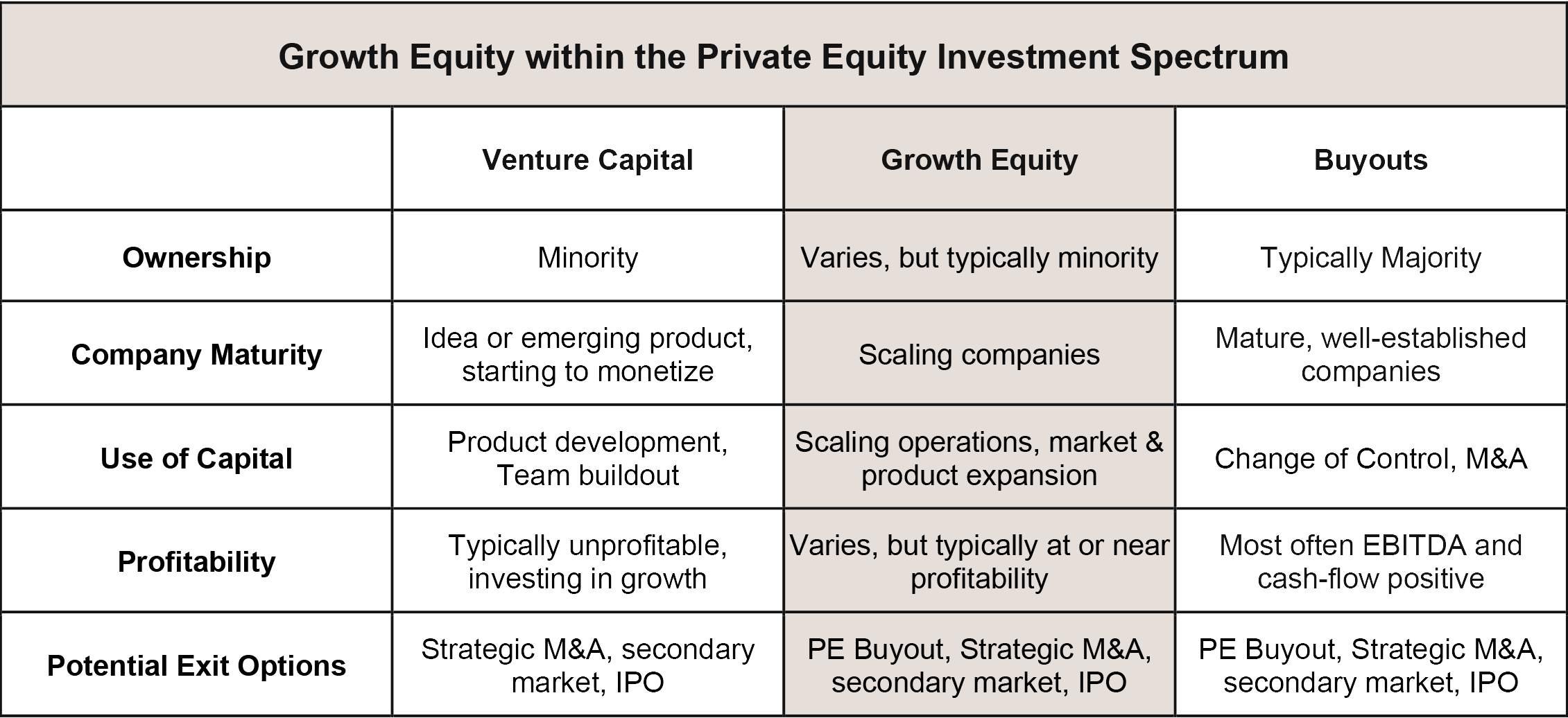
As with venture capital, growth equity is commonly accessed through commingled, closed-end funds that invest in a diversified set of companies across sectors. These funds typically hold companies for slightly less time than venture funds before seeking an exit, but they are still long-term investment vehicles. Because outcomes rely on continued company performance, manager selection is still important.
In summary, growth equity sits at the intersection of venture capital and traditional private equity (i.e., buyouts). Typically, it aims to invest in companies with demonstrated traction that are ready to scale further. However, growth equity remains an illiquid, long-term investment, and investors should be prepared for multi-year holding periods, limited liquidity, and the risk that growth may slow or fail to materialize as expected. For Crowd Street members, understanding these dynamics can help determine whether growth equity aligns with one’s goals, risk tolerance, and liquidity needs.